Microsoft and OpenAI Broke Up. Now They're Ready to Fight.
Microsoft lost exclusive OpenAI cloud rights in April 2026, then unveiled its own reasoning model at Build 2026. The most important partnership in AI is now a competition — and neither side is pretending otherwise.
For three years, the most important partnership in AI was not between two equals. It was a dependency. Microsoft wrote the cheques. OpenAI built the models. Microsoft hosted them, sold them, and built Copilot on top of them. That arrangement made both companies extraordinarily powerful. It also made Microsoft dependent on a single AI supplier in a market where the technology is the product. In April 2026, that dependency quietly ended.
The restructuring of the Microsoft–OpenAI deal removed several exclusivity provisions. OpenAI gained freedom to work with multiple cloud providers. Microsoft lost exclusive cloud rights. Both retained their financial relationship and access agreements — but the strategic posture shifted fundamentally. What was a partnership is now, simultaneously, a competition.
At Build 2026, Microsoft made that competition visible.
What actually changed in the deal
The headlines called it a breakup. The reality is more precise.
Microsoft still benefits financially from OpenAI’s growth. OpenAI still runs on Azure. The two companies remain closely tied. But the key change is what each side can now do independently:
OpenAI can pursue its own compute relationships and build its own ecosystem — including the reported shift toward Apple, enterprise software, and hardware partnerships.
Microsoft can build, train, and deploy its own frontier models — without needing to protect OpenAI’s position in the process.
Previously, the question Microsoft had to ask before every AI decision was: does this compete with OpenAI? That constraint is gone.
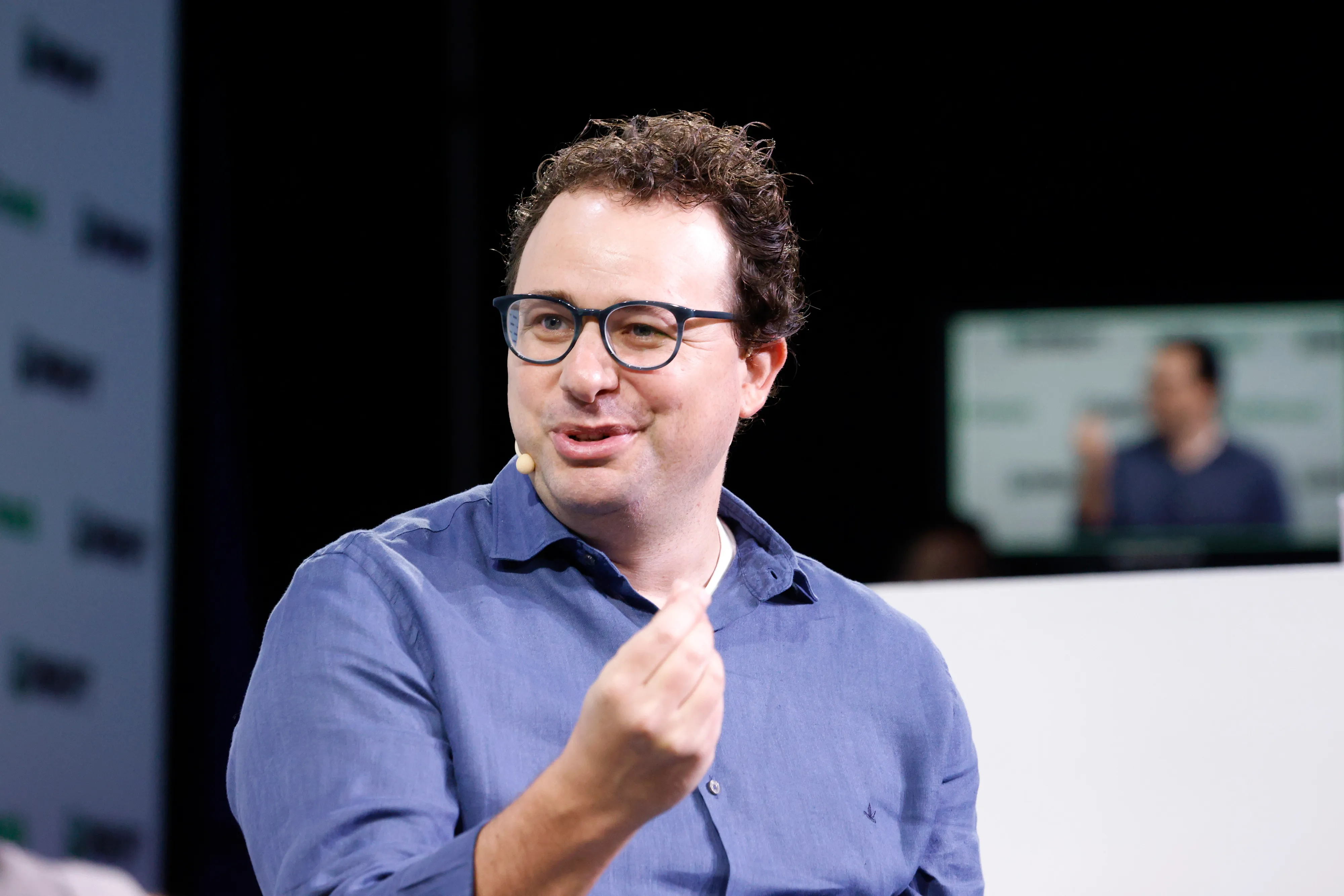
Microsoft wants to join the top AI labs alongside OpenAI, Anthropic, and Google DeepMind.
That quote, from Suleyman at Build 2026, is not a vague aspiration. It is a strategic declaration from the person now running Microsoft’s AI division. The company that spent $13 billion to access someone else’s models now wants to train its own.
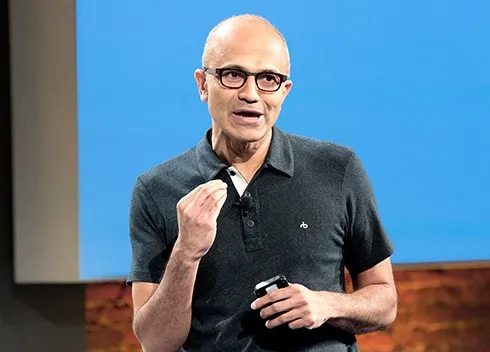
Photo: Satya Nadella, CEO of Microsoft. Credit: Richard Morgenstein, CC BY-SA 4.0, via Wikimedia Commons.
MAI-Thinking-1: Microsoft’s first real model
The centrepiece of Build 2026 was MAI-Thinking-1, Microsoft’s first advanced reasoning model. Microsoft also announced image models, voice models, transcription models, and coding models.
Two things about the MAI-Thinking-1 announcement deserve attention.
First, the emphasis on independent training. Microsoft repeatedly stated that MAI-Thinking-1 was trained from scratch — not distilled from OpenAI technology. That caveat matters because the obvious criticism is that Microsoft’s “original” model is just OpenAI’s GPT in different packaging. The company is working hard to establish a counter-narrative.
Second, the timing. Microsoft unveiled its own reasoning model at the same Build conference where it also announced a renewed Copilot strategy, autonomous agents, and enterprise AI workflows. This is not a research paper. It is a product announcement designed to signal that Microsoft is now a model provider, not just a model distributor.
Whether MAI-Thinking-1 matches OpenAI’s o-series or Anthropic’s Claude 3.7 on benchmarks is, for now, beside the point. The signal is what counts.
Why enterprise AI is the real battleground
Most people track the AI race through consumer products — ChatGPT subscriptions, image generators, coding assistants. That is the visible surface.
The actual money is in enterprise software, and Microsoft’s position there is extraordinary.
Microsoft already owns:
- Microsoft 365 (Word, Excel, Outlook, Teams) — used by over 400 million people
- GitHub — the world’s dominant code hosting platform
- Azure — one of two dominant global cloud platforms
- Windows — still the primary operating system for enterprise computing
No AI startup has this distribution. OpenAI does not have it. Anthropic does not have it. Google comes closest, through Workspace and GCP, but even there the enterprise penetration is narrower.
The AI race is not purely about who has the best model. It is increasingly about who can get AI into the workflow that businesses already use every day. Microsoft can do that without anyone switching applications.
The winner of AI might not be the company with the smartest model. It may be the company that gets AI into every workplace.
Copilot is becoming Microsoft’s AI super app
Microsoft’s Copilot strategy has evolved substantially since its 2023 debut as a productivity assistant.
At Build 2026, the Copilot announcements covered:
- Autonomous agents that can execute long-running tasks without human approval at each step
- Workflow automation across Microsoft 365 applications
- Enterprise assistants with memory and context persistence
- AI-native task management integrated into Teams and Outlook
This is not an assistant. It is an attempt to build an AI operating layer that sits above all of Microsoft’s existing software.
The language Microsoft used — “agentic,” “autonomous,” “long-running” — mirrors what the AI industry broadly calls the shift from reactive chatbots to proactive agents. Microsoft is not inventing this direction. It is executing it at enterprise scale, with existing customer relationships and without needing to acquire a new user base.
OpenAI’s reported Atlas project and its evolving ChatGPT strategy point in the same direction. The two companies are converging on the same vision from different starting points: OpenAI from consumer AI toward enterprise, Microsoft from enterprise infrastructure toward frontier AI.
”Humanist Superintelligence” — what the branding is really saying
Suleyman used the phrase “humanist superintelligence” multiple times during Build 2026 and in subsequent press coverage.
The phrase is doing two things.
Technically, it signals that Microsoft wants to pursue very capable AI systems — the “superintelligence” part. Politically, the “humanist” prefix is a regulator- and enterprise-buyer-friendly framing that positions Microsoft as the responsible alternative to less safety-conscious competitors.
This language pattern is now common across the industry. After years of AGI panic, every major AI company has adopted some version of “responsible AI,” “human-centered AI,” or “safety-first” branding. Microsoft’s version is more dramatic — superintelligence is not a word most enterprise software companies use — but the strategy is the same: signal ambition to the technical community while reassuring everyone else.
Where this leaves OpenAI
OpenAI is not weakened by this development in any direct sense. The company is pursuing a parallel strategy that includes its own hardware ambitions, a growing consumer subscription business, and enterprise API revenue that continues to scale.
What changes is the framing. OpenAI is no longer the only frontier AI company with a massive enterprise distribution partner behind it. Microsoft’s enterprise reach was a key part of OpenAI’s competitive moat. That moat still exists — the financial relationship and Azure arrangement remain — but it is no longer exclusive.
OpenAI now needs to build its own distribution in ways it did not need to when Microsoft was the guaranteed enterprise channel.
What this means for businesses evaluating AI
If you are a business currently deciding which AI stack to build on, the Microsoft–OpenAI restructuring has practical implications.
Vendor concentration risk has decreased. Businesses that built on Azure OpenAI Service are not locked into OpenAI models. Microsoft can now offer alternatives — its own MAI models, Anthropic’s Claude on Azure, and thousands of open-source models through Azure AI Foundry.
Enterprise AI is getting more competitive, which historically means better pricing and more options. The period of OpenAI having a near-monopoly on enterprise-grade language models through a single cloud channel is ending.
For businesses building AI products — whether chatbots, agents, automation pipelines, or internal tools — the practical advice is the same as it was before Build 2026: do not bet your architecture on a single model provider. Build abstraction layers. The infrastructure is changing fast, and the company with the best model today may not hold that position in twelve months.
The final read
The Microsoft–OpenAI relationship has shifted from partner to partner-and-competitor. That is not a crisis for either company. Both are well-capitalised, growing, and positioned to benefit from enterprise AI adoption regardless of how market share distributes between them.
What Build 2026 confirmed is that the AI industry’s structure is changing. The era of one dominant frontier lab with one dominant cloud distribution partner is ending. What replaces it is a more competitive, more distributed market where model quality is one factor among several — and where enterprise distribution, safety positioning, and platform ownership may matter as much as benchmark performance.
Microsoft just told the market it intends to compete on all of those dimensions. Whether it succeeds is a different question. That it is trying, seriously, is no longer in doubt.